
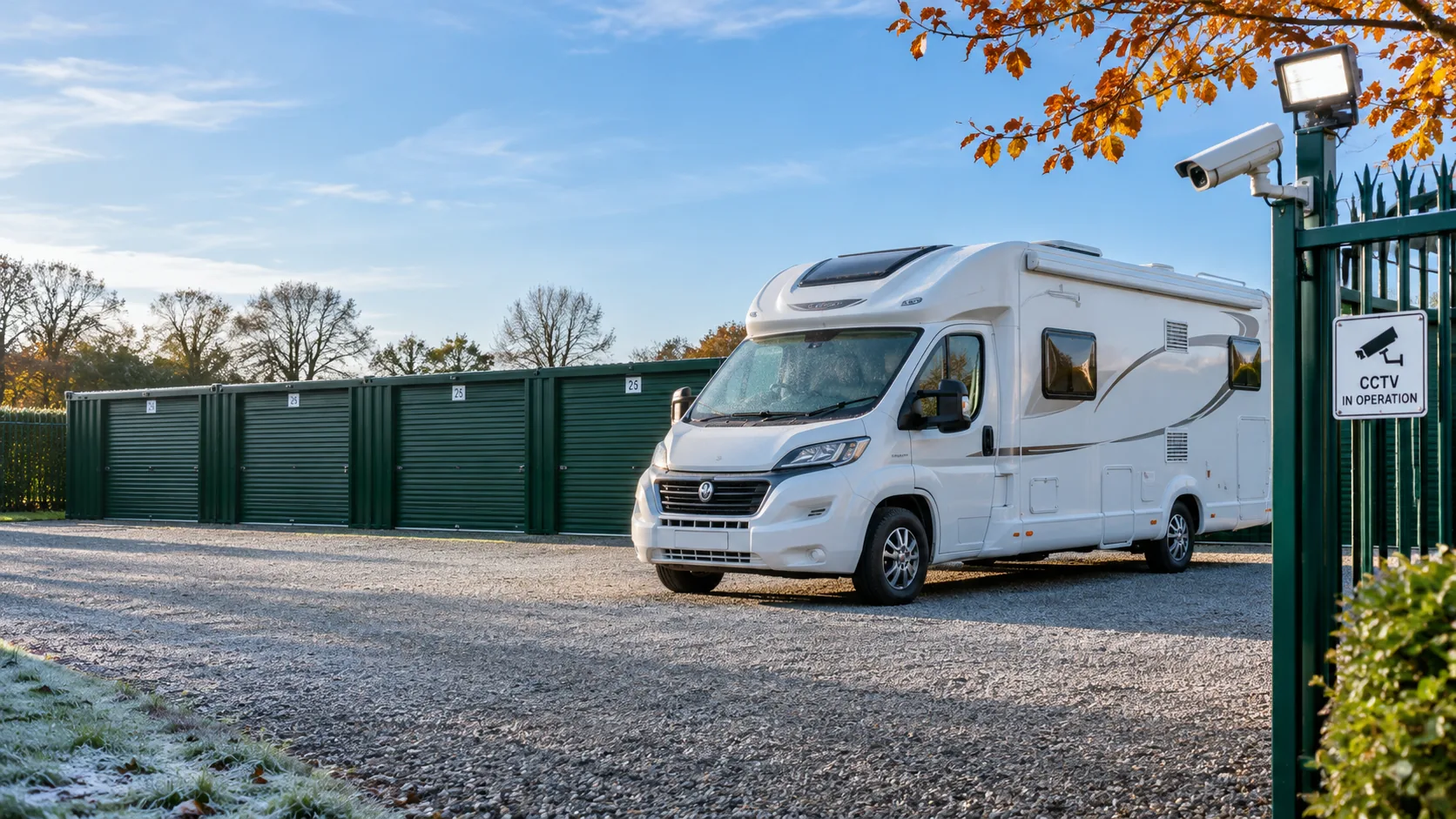
Putting a motorhome away for winter is more than finding somewhere to park it. A few sensible preparation steps can help reduce the risk of damp, frozen water systems, flat batteries, tyre problems and unpleasant surprises when you want to use the vehicle again.
This guide covers the main things to think about before winter storage. Always follow the manufacturer’s instructions for your exact motorhome, especially for water systems, batteries, tyres and heating equipment. If you also need a secure place to keep the vehicle, see our motorhome and vehicle storage near Newmarket options.
Is Your Motorhome Ready for Winter Storage?
Tick each item as you prepare the vehicle. Your progress is saved on this device.
Winter Storage Timeline
Choose a stage to see what to focus on.
Start With the Manufacturer’s Winterisation Guidance
A good motorhome storage site should make it easy to arrive, park safely and return when you need the vehicle again. Before committing, check how the site is secured, what access arrangements apply, whether the surface is suitable in poor weather and whether the space is appropriate for the size of your motorhome.
It is also worth asking how flexible the arrangement is. Some owners only need winter storage, while others want somewhere for most of the year and collect their motorhome for holidays or weekends away.
Security Matters More Than Distance Alone
Convenience is important, but security should be near the top of the list. Look for a managed site with sensible access controls and monitoring rather than choosing a location purely because it is a few minutes closer.
At Morris Safe Storage Solutions the facility is monitored by CCTV. If you are comparing options, ask each provider exactly what security measures are in place and what responsibilities remain with you as the vehicle owner.
Make Sure There Is Enough Room to Manoeuvre
Motorhomes are larger and less forgiving than ordinary cars. A storage space may look adequate on paper but still be awkward if the turning area is tight or the route to the pitch is narrow.
Check that you are comfortable entering and leaving the site, particularly if your motorhome is long, wide or has a substantial rear overhang. If you are unsure, contact the facility before arriving and give them the approximate dimensions of the vehicle.
Think About the Surface and Weather
A motorhome can remain parked for weeks or months, so the surface beneath it matters. A stable, well-drained area is preferable to soft ground that can become muddy, uneven or difficult to access in wet weather.
If you are planning winter storage, think about how easy it will be to collect the vehicle after prolonged rain or cold weather rather than only considering how the site looks in summer.
Short-Term, Winter or Long-Term Motorhome Storage?
There is no single correct storage period. Some owners need somewhere secure for a few weeks between trips; others want to remove a motorhome from the driveway throughout winter; and some keep it in storage for most of the year.
Before choosing a provider, ask whether the arrangement suits the way you actually use the motorhome. Flexible terms are useful if your plans change or you are not sure how long the vehicle will be stored.
How Should You Prepare a Motorhome for Storage?
The exact preparation depends on the vehicle, the season and how long it will be left. Always follow the motorhome manufacturer's guidance, particularly for batteries, water systems, tyres and winterisation.
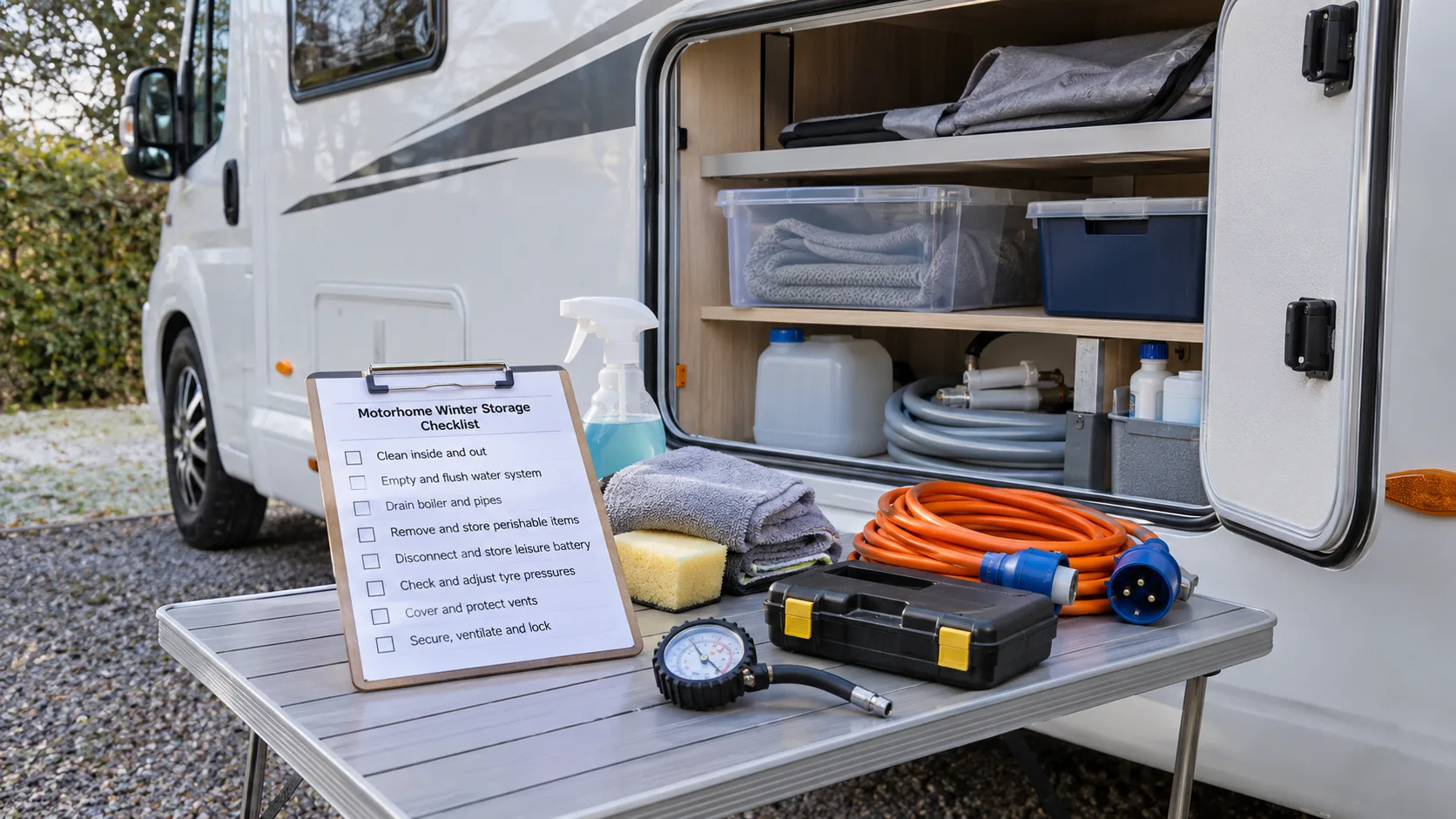
As a general checklist, owners commonly:
- remove food and anything that could attract pests;
- clean and dry the interior before leaving the vehicle;
- empty bins, waste tanks and perishable supplies;
- check tyre pressures and condition in line with manufacturer guidance;
- deal with fresh-water and waste-water systems appropriately for the season;
- secure windows, rooflights, lockers and external storage compartments;
- remove valuables that do not need to remain in the vehicle; and
- check the battery and electrical-storage guidance for your specific model.
If the vehicle is going into winter storage, manufacturer instructions are especially important because freezing temperatures can affect water systems and other components.
Do You Need Insurance While a Motorhome Is in Storage?
Do not assume that storing a motorhome means normal insurance requirements disappear. Check your policy carefully and tell your insurer how and where the vehicle will be stored if required.
The storage facility's security measures and your own insurance are separate things. If you are also storing household or business belongings, our guide to storage unit insurance explains the same principle in more detail.
How Often Can You Access a Stored Motorhome?
Access arrangements vary from site to site. Some people only need to collect their motorhome at the beginning of a holiday; others want to visit more regularly to check the vehicle or prepare it for a trip.
Morris Safe Storage Solutions is open 7 days a week, 8am-8pm. If regular access matters to you, discuss that when enquiring so you know the arrangement suits your plans.
Motorhome Storage vs Caravan Storage
Many of the things to consider are similar: security, access, surface condition, insurance and the amount of manoeuvring space. The practical differences come from the vehicle itself. A motorhome has an engine, battery systems and vehicle-specific maintenance requirements that a caravan does not.
If you also own a caravan, our caravan storage in Newmarket guide covers the main points to check before leaving it in storage.
Is Indoor Motorhome Storage Better?
Indoor storage can be attractive, but it is not automatically the right option for every owner. The key questions are whether the space genuinely accommodates your vehicle, whether access is practical, what the cost difference is and what security is provided.
Outdoor or open-site storage can still be a practical solution when the site is secure, well managed and suitable for the vehicle. What matters is choosing an arrangement that fits your motorhome and how often you use it.
How Much Does Motorhome Storage Cost?
Motorhome storage prices vary by vehicle size, storage type, location and availability. Because vehicles differ considerably, it is better to get a quote for the specific motorhome rather than rely on a generic figure that may not apply.
For current availability and pricing at Morris Safe Storage Solutions, contact Tony and Callum with the approximate length and type of motorhome you want to store.
Motorhome Storage for Campervans and Larger Vehicles
The phrase “motorhome storage” covers vehicles of very different sizes. A compact campervan may be little larger than a normal van, while a large coachbuilt or A-class motorhome needs significantly more room to turn and park.
That is why it helps to give the storage provider the approximate length, width and height when you enquire. Morris Safe Storage Solutions can then tell you whether the current vehicle-storage space is suitable before you make an unnecessary trip.
Should You Visit a Motorhome While It Is Stored?
That depends on how long the vehicle will be stored and the manufacturer’s advice. For a short stay you may not need to do anything beyond preparing the motorhome correctly before leaving it. For a longer period, some owners prefer to check the vehicle periodically.
If you do visit, look for obvious changes such as a flat tyre, signs of moisture or anything around the vehicle that needs attention. Avoid carrying out maintenance on site unless the storage provider permits it and you are confident the work is safe and appropriate.
Winter Motorhome Storage: Extra Things to Think About
Winter is one of the most common times to put a motorhome into storage because many owners use the vehicle less frequently once the weather turns colder. It is also the time when preparation matters most.
Follow the manufacturer’s winterisation guidance for your exact vehicle and fitted equipment. Water systems, batteries, tyres, seals and ventilation can all need attention, but the correct procedure varies between models. If you are unsure, use the handbook or speak to a qualified motorhome service provider rather than relying on a generic checklist alone.
Remove anything that could spoil or attract pests, make sure the interior is dry, and check that doors, windows and external lockers are secure. It is also sensible to keep a note of the condition and mileage when the vehicle goes into storage.
Questions to Ask Before Booking Motorhome Storage
Before you agree to a storage arrangement, confirm the opening hours, how access works, whether you need to give notice before collecting the vehicle, what security measures are in place and whether there are any restrictions on vehicle size or condition.
It is also worth asking what happens if you need to extend the storage period. Plans change, especially around winter trips and holidays, so a flexible arrangement can be useful if you originally expect to store the motorhome for a month and later decide to leave it longer.
If you are comparing several storage sites, write down the answers rather than relying on price alone. A cheaper space may not be good value if access is awkward, the site is difficult to reach with a large vehicle or the opening hours do not fit the way you travel.
Before You Collect Your Motorhome Again
Do not assume that a vehicle is ready for a long trip simply because it looks the same as when you parked it. Tyres, batteries, fluids and safety equipment all deserve attention before you set off after an extended period of storage.
When it is time to take the vehicle back on the road, carry out the normal pre-use checks recommended by the manufacturer. If the motorhome has been stored for a long period, consider whether any servicing, safety checks or habitation checks are due before your next journey.
Choosing a Secure Place for Winter Motorhome Storage
If you are based in Newmarket, Stowmarket, Ely or the surrounding area and want secure space away from home, Morris Safe Storage Solutions can discuss current vehicle-storage availability with you. The facility is near the A14, making it practical for customers travelling from different parts of Suffolk and Cambridgeshire.
Our vehicle storage page covers cars, caravans, motorhomes, boats and horseboxes. Availability can change, so the best next step is to get in touch before travelling to site.
Motorhome Winter Storage Checklist
- follow the manufacturer’s winterisation and storage guidance;
- check the site’s security and access arrangements;
- make sure there is enough room to manoeuvre the vehicle safely;
- confirm the surface is suitable for longer-term parking;
- check opening hours and how frequently you can access the vehicle;
- confirm your insurance remains appropriate while the vehicle is stored; and
- ask for a quote based on your actual motorhome and intended storage period.
If you would like to discuss motorhome storage near Newmarket, contact Morris Safe Storage Solutions and let us know the approximate size of your vehicle and how long you expect to store it.